How to saturate vocals: warmth, presence and grit without harshness
Where saturation goes in a vocal chain, settings for warmth, presence, air and grit, and how to keep sibilance and the low-mids from turning harsh or muddy.
By CrystalKarat9 min read
Saturation is the difference between a vocal that sits in the speakers and one that sits in the song. A little makes a voice denser and closer; a lot makes it an effect. The trouble is that a voice is several sounds at once (a chesty body, a presence region the ear is very sensitive to, consonants and air on top), and one curve over all of them often helps one and hurts another. This guide covers where saturation goes in the chain, three recipes, and how to keep it from turning harsh.
What saturation does to a vocal
- Density. Saturation squashes peaks, so the quiet parts of the performance come up relative to the loud ones and the voice holds its place.
- Harmonics. New overtones above each note make the voice audible at lower fader levels, which is why saturated vocals cut through dense mixes.
- Character. The curve itself: tube and tape sound warm because they add mostly even harmonics; amp and distortion add odd ones and sound edgier. Our saturation explainer shows why.
Where it goes in the chain
A common, reliable order is: corrective EQ, compression, saturation, then de-essing and tone EQ. Each step has a reason:
- Clean up before. High-pass the rumble and cut resonances first, or the saturator generates harmonics from them.
- Compress before. A steady level into the curve gives a steady amount of colour; an uncompressed vocal crunches on the loud words and stays clean on the quiet ones.
- De-ess before as well as after, if needed. Saturation raises sibilance. A gentle de-esser before the saturator keeps the curve from being driven by esses; one after catches what is left.
Warmth: body without mud
For a voice that sounds thin or digital. Tube or warm tape, driven lightly: well under the point where you hear distortion as distortion. Push the drive until you can hear it, then back it off by a third.
Presence and air: forward without harsh
The 2 to 5 kHz region is where intelligibility lives, and also where harshness lives. Saturating it in parallel adds presence without turning it into a boost: blend tube or soft clipping on that region at 15 to 30%. Above about 8 to 10 kHz, gentle saturation adds air that sounds smoother than an EQ shelf, because it adds harmonics instead of raising whatever noise is already there.
This is where multiband saturation earns its place on vocals: the body can take tape, the presence a light parallel blend, and the air its own soft curve, each at its own drive. Our multiband guide has crossover points to start from.
Grit, radio and effect vocals
| Effect | How |
|---|---|
| Rap and rock grit | Amp or soft distortion blended in parallel at 20 to 40%, so the words stay clear |
| Radio or telephone | Amp grit, high-passed around 300 to 350 Hz and low-passed around 3.5 to 4 kHz: the band a telephone line carries |
| Megaphone or blown speaker | Hard distortion with a narrow midrange band and the lows cut hard |
| Lo-fi | Bit reduction or worn tape, with the top rolled off |
For heavy grit on a lead vocal, a parallel blend almost always beats an insert: the dry voice keeps the consonants intelligible, and the distorted copy adds the attitude. See our parallel saturation guide for the setup.
Sibilance, and why it gets worse
Esses are loud, bright bursts. A saturator compresses them less than you might hope, and adds harmonics above them, so they come out harsher and spread higher. Three remedies, lightest first: de-ess before the saturator; keep the air band’s drive lower than the body’s; or soften transients in the top band before its curve, so consonants hit it less hard.
Five mistakes to avoid
- Judging louder as better. Saturation adds level. Level-match every comparison.
- Too much on the body. The low-mids go cloudy and the voice sounds further away, not closer.
- Saturating before cleanup. Rumble, plosives and room resonances all get harmonics of their own.
- The same treatment on backing vocals. Stacked saturated voices build up fast. Saturate the backing bus lightly, or not at all, and keep the colour on the lead.
- Soloing to set it. Saturation that sounds right on a soloed vocal is usually too much in the mix. Set it with everything playing.
Plugins for vocal saturation
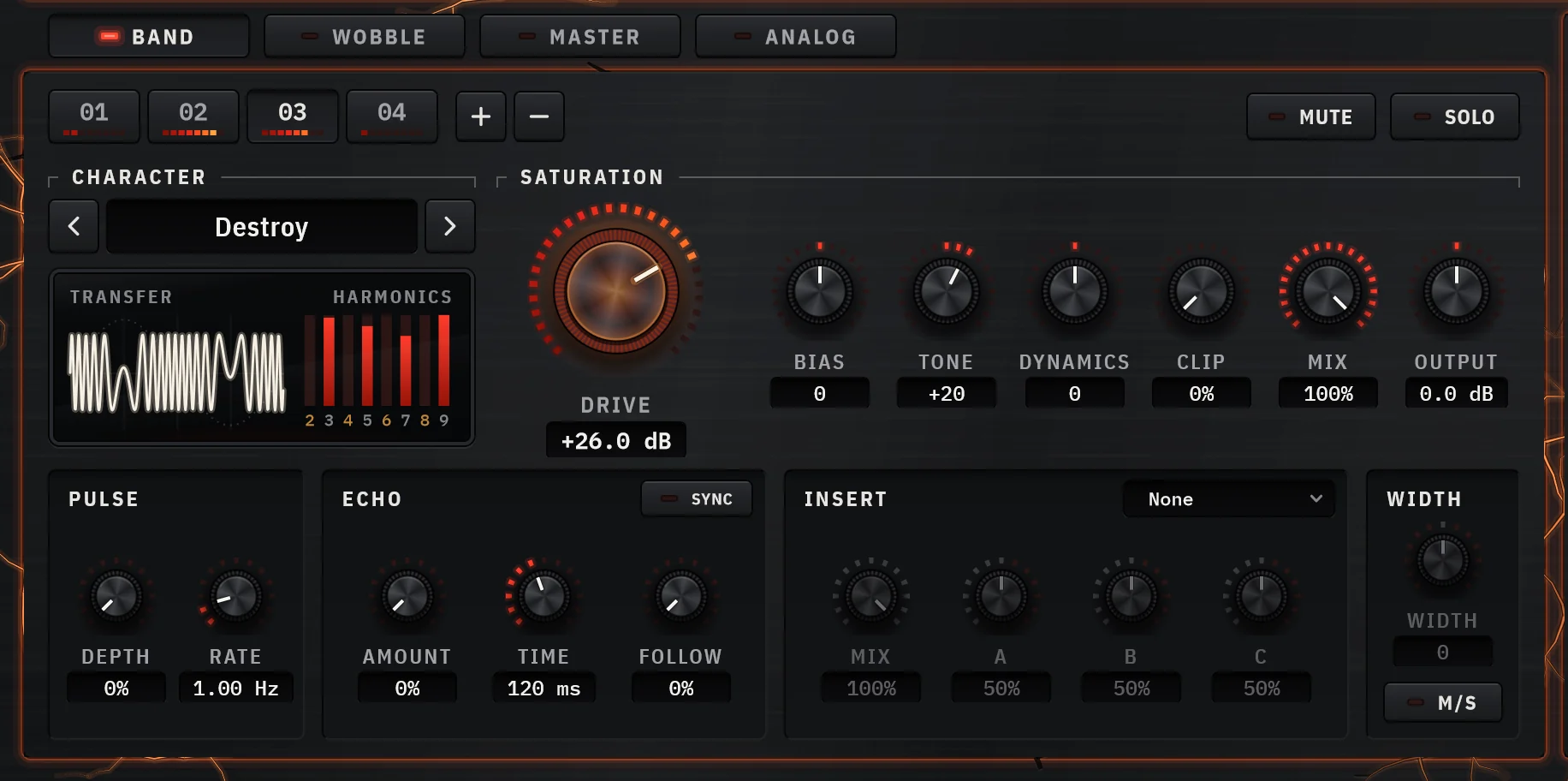
01Forgeby CrystalKarat
Multiband saturatorBest for: Different colour on the body, presence and air of one voice
A voice wants different treatment in different registers, which is what Forge is for. Its factory Vocal Warmth preset puts valve warmth on the body of the voice, from 250 Hz to 3.5 kHz, softens its consonant spikes and leaves the top open; Vocal Air is tape body under 3 kHz with a soft-clipped, brightened air band above it; De-Harsh soft-clips a steep-edged 2 to 5 kHz band with its transients eased; and Radio Voice squeezes amp grit between a 350 Hz high-pass and a 3.8 kHz low-pass.
Analyze’s Air target sets this up from four seconds of the vocal: biased valve on the presence and air bands in parallel, everything below the mids left dry. Every band has its own Mix and its own dynamics before the shaper, so consonants can be softened before they hit the curve.
Why pick it
- Separate colour on body, presence and air
- Per-band dynamics soften consonants before the curve
- Per-band Mix for parallel presence
- Factory vocal presets from warmth to radio
Know first
- No AAX for Pro Tools yet
- No built-in de-esser: put one before it
- Price
- $49 once, or by subscription · 7-day trial, no card
- Formats
- Windows VST3 · macOS VST3 and AU
Forge is ours: CrystalKarat makes it and publishes this blog. Everything else on this list is another company's, and nobody paid to be on it.
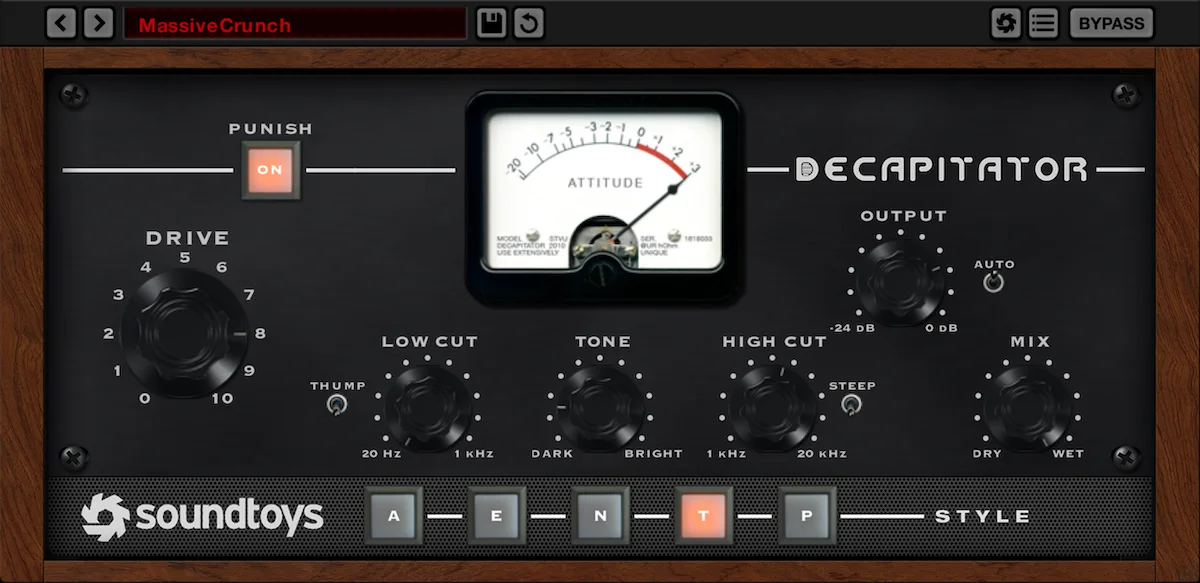
Decapitator. Image: Soundtoys 02Decapitatorby Soundtoys
Analog saturation modelerBest for: Quick character, from subtle to aggressive
Decapitator’s five styles cover most vocal colours, and its Mix, low cut and high cut let you blend the saturation and keep it out of the low end and the esses. A staple on rap and rock vocals.
Why pick it
- Five distinct styles
- Mix and filters built in
Know first
- Single band: the whole voice goes through one curve
Premium · Regularly discounted; part of Soundtoys 5
Soundtoys's page for Decapitator (opens in a new tab)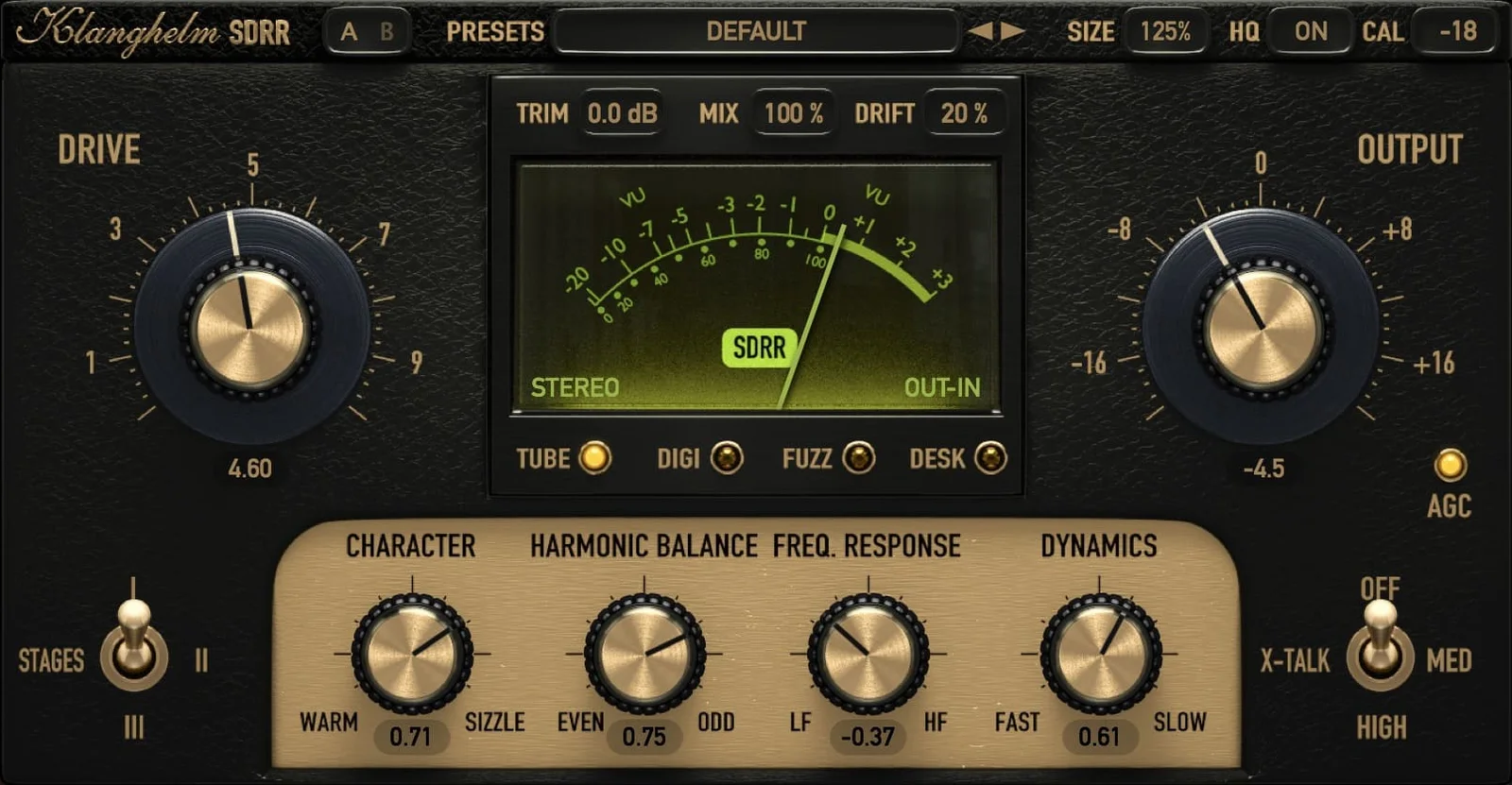
SDRR2. Image: Klanghelm 03SDRR2by Klanghelm
Saturation with four modesBest for: Subtle warmth on a budget
SDRR2’s Tube and Desk modes are well suited to the warmth recipe below: light, even colour that thickens a voice without obviously distorting it. It is one of the best-value saturators you can buy.
Why pick it
- Four characters
- Very low price
- Light on the CPU
Know first
- Input calibration takes a moment to understand
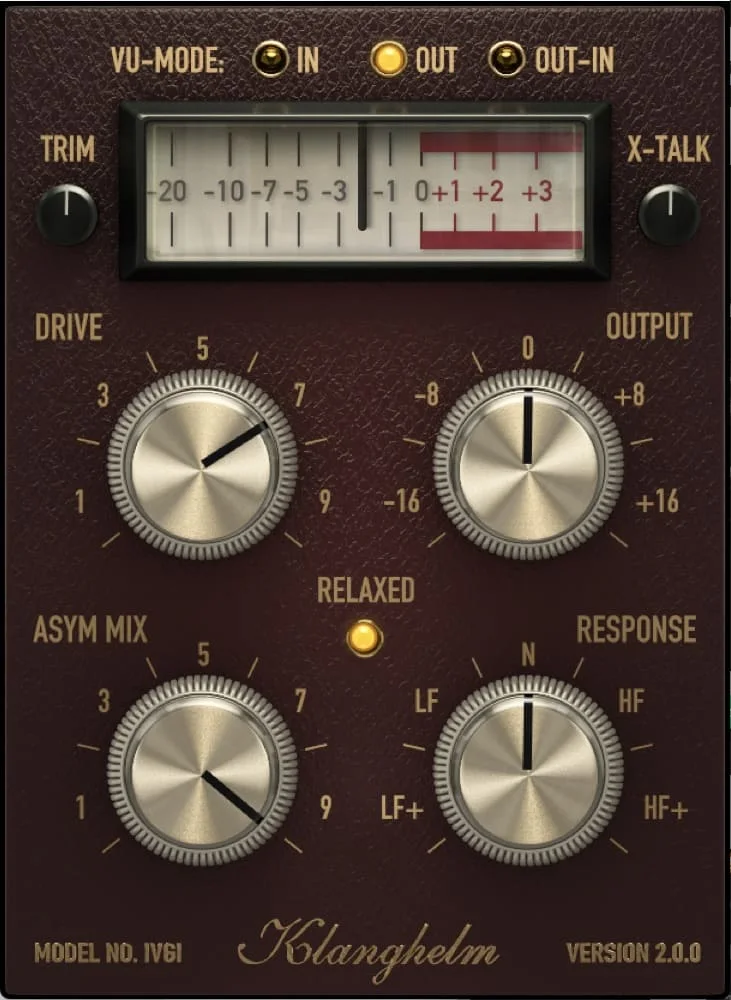
IVGI. Image: Klanghelm 04IVGIby Klanghelm
Subtle to heavy saturationBest for: A free first step
IVGI, from the maker of SDRR2, goes from barely there to heavy with one Drive control, and its Asym Mix control changes the balance of even and odd harmonics. Kept low, it is a free way to try the warmth recipe below.
Why pick it
- Free
- Wide range from subtle to heavy
Know first
- Single band: the whole voice goes through one curve
Questions
Should saturation go before or after compression on vocals?
Usually after. A compressed vocal reaches the saturator at a steady level, so it gets a steady amount of colour; an uncompressed one crunches on the loud words and stays clean on the quiet ones. Clean up rumble and resonances with EQ before both.
Does saturation make sibilance worse?
Yes. Esses are loud and bright, and saturation adds harmonics above them, so they come out harsher. De-ess before the saturator, keep the drive on the top of the voice lower than on its body, or soften the transients in the top band before its curve.
What type of saturation is best for vocals?
Tube or tape for warmth and density, since they add mostly even harmonics; soft clipping or tube in parallel for presence; amp or distortion in parallel for rap and rock grit. Multiband saturation lets you use a different one on the body, presence and air.
How do I make a vocal sound like a telephone or radio?
Add amp-style distortion, then high-pass around 300 to 350 Hz and low-pass around 3.5 to 4 kHz, the band a telephone line carries. Compress it firmly so it stays flat and boxy.